Custom Error Description
Custom Error Description enables developers to specify tailored validation messages for form controls. These messages appear when user input fails to meet the defined validation criteria, offering clear and relevant feedback. This functionality improves form usability, streamlines error handling, and supports accessibility best practices.
Steps to add custom error description
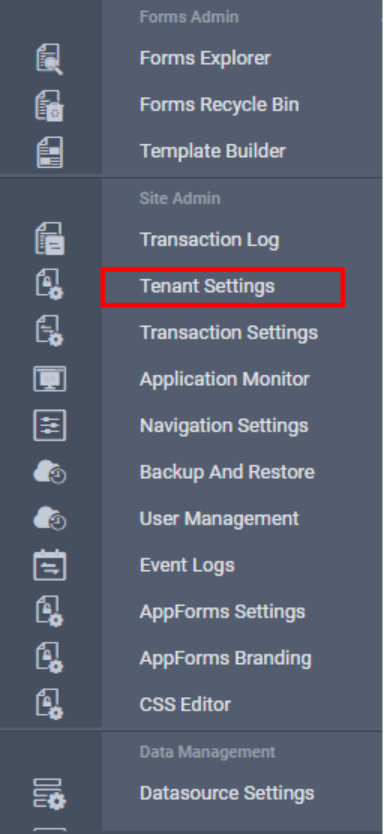
Select the Tenant settings from the left navigation link as shown in the image below.
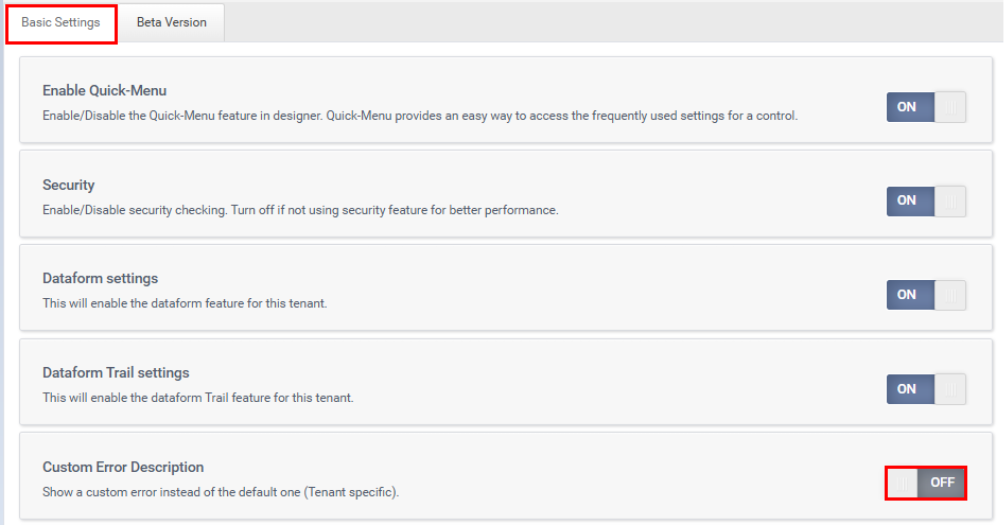
The tenant Settings page appears; Custom Error Description option is available from Basic Settings Tab as illustrated in the image below.
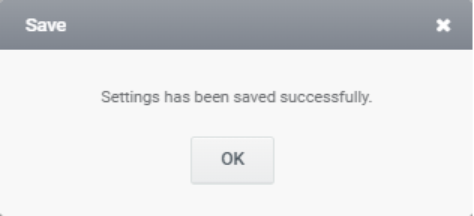
When the “Custom Error Description” option is enabled, a message box appears, as shown in the image below.
Click OK. A Textbox will appear for entering the custom message. Enter the desired text to be displayed and click Update, as shown in the image below.

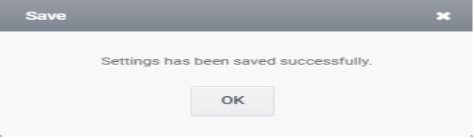
The message box appears on clicking update button as shown in the image below.
Example of working with Custom Error Description
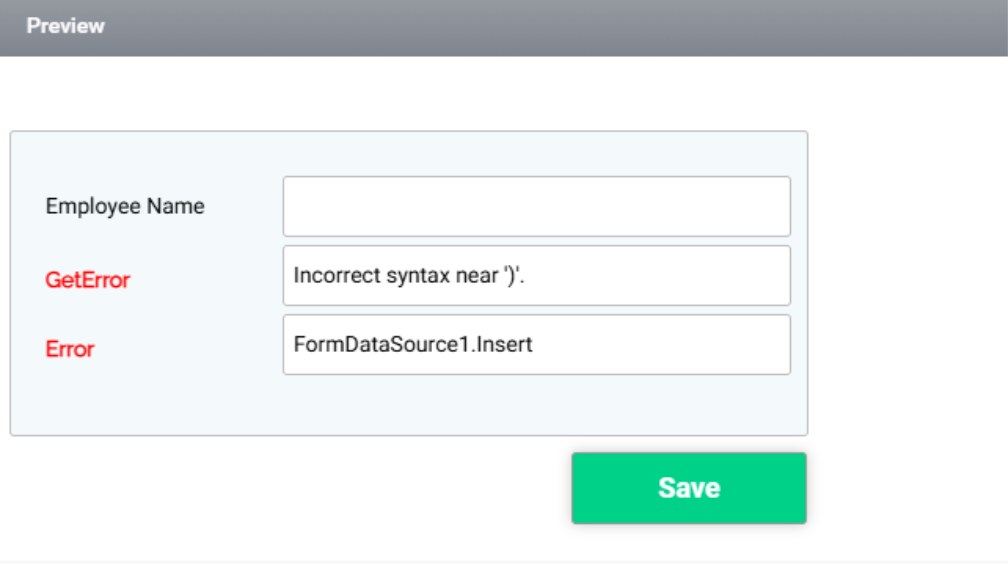
When attempting to insert a character into an integer column in an SQL table, an error is triggered: “Incorrect Syntax Error.” This default error can be replaced with a custom error message configured in the tenant settings.
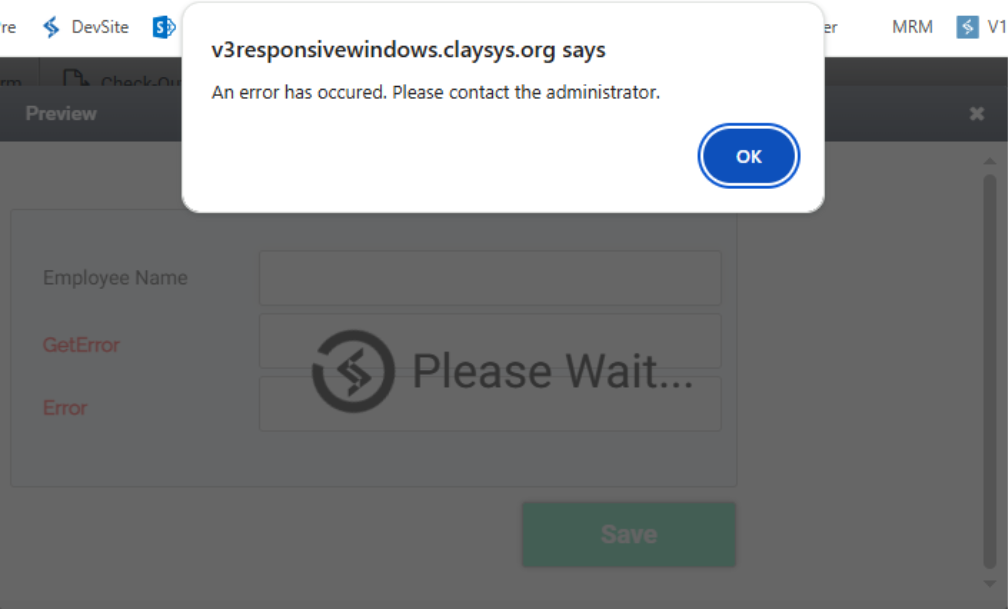
Get Error:
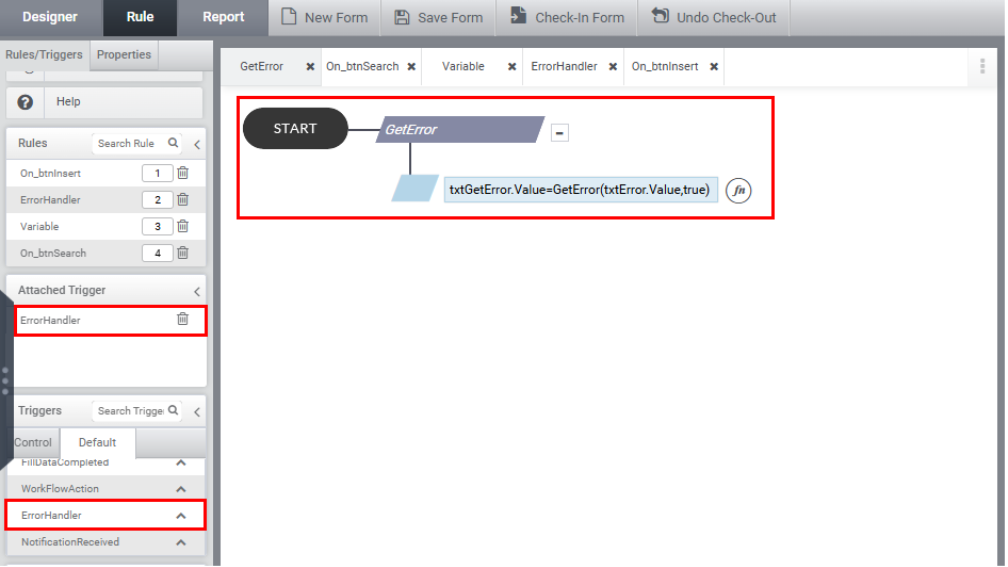
Get Error is used to fetch and display the exact error message that occurs during execution. The Get Error rule can be used to capture the actual error message and assign it to a control or variable.
This rule is triggered by the Error Handler, which is available under the default triggers, as shown in the image below.
In the below example actual Error message is getting in Textbox control and Suppress error is set as false.
Exception appears as suppress error was given as false as shown in the image below.
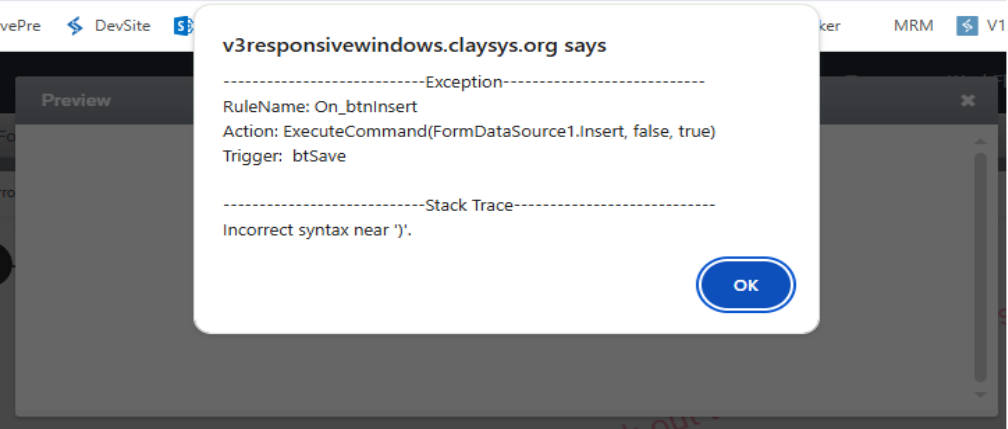
The exception message will appear in the txtGetError textbox, and the error will also be shown in txtError, as illustrated in the image below.
B) In the example below, the actual error message is captured in the Textbox control, and Suppress Error is set to true.
The exception message will be shown in the txtGetError textbox, while the error will also appear in txtError, as demonstrated in the image below.