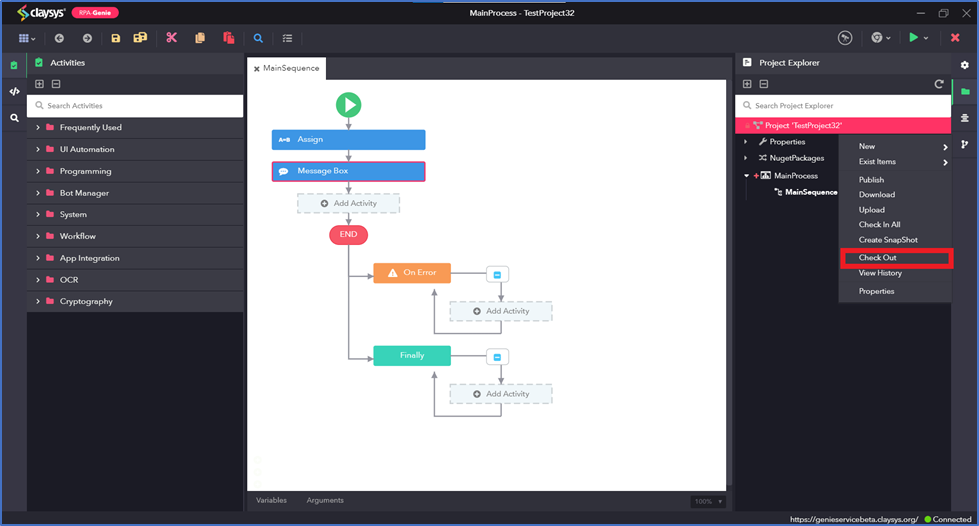
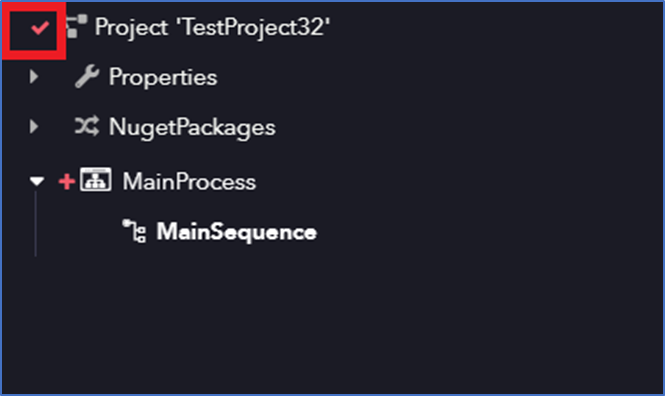
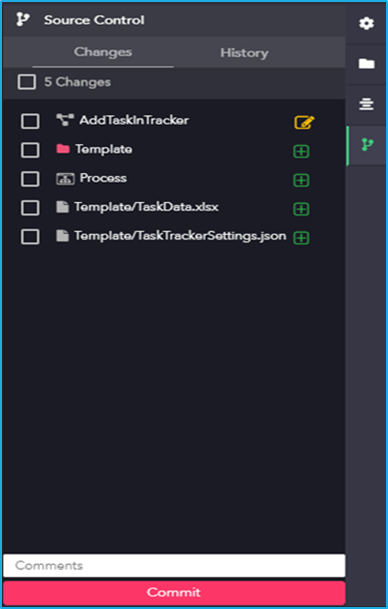
Green icon beside a process in the source control indicates that a process that has been newly created is ready to be checked in.
Orange icon beside a process in the source control indicates that modifications had been made to an existing process and is ready to be checked in.
Red Icon beside a process in the source control indicates that a checked-in process is ready to be deleted and must be selected from the source control in order to completely remove that process from the project.
The user has to check in a process after making the required changes to the process, so that other users will be able to check out that particular checked-in process to make further modifications to the same.
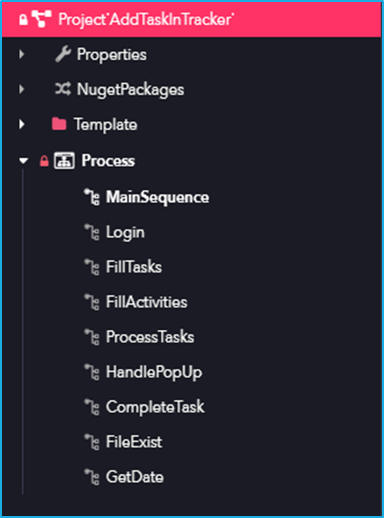
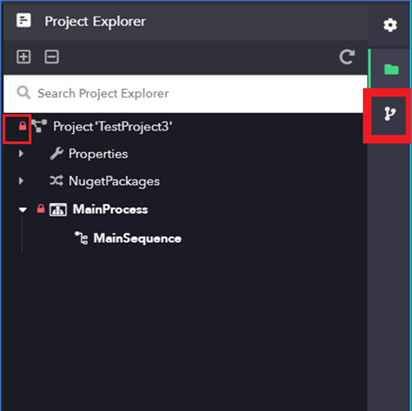
N.B. – In the “Project Explorer”, a lock symbol will appear beside the process that had been checked-in.
Whenever a user finishes modifying a particular project or process, the changes can be Checked-in, making it available for other users to check out and continue working on the same. This approach assists in managing several concurrent development projects, keeping track of version history, and avoiding data loss or overwriting of changes made by different team members.
There are two ways to access the Source Control –
By clicking the source control icon on the right-hand side of the designer panel.
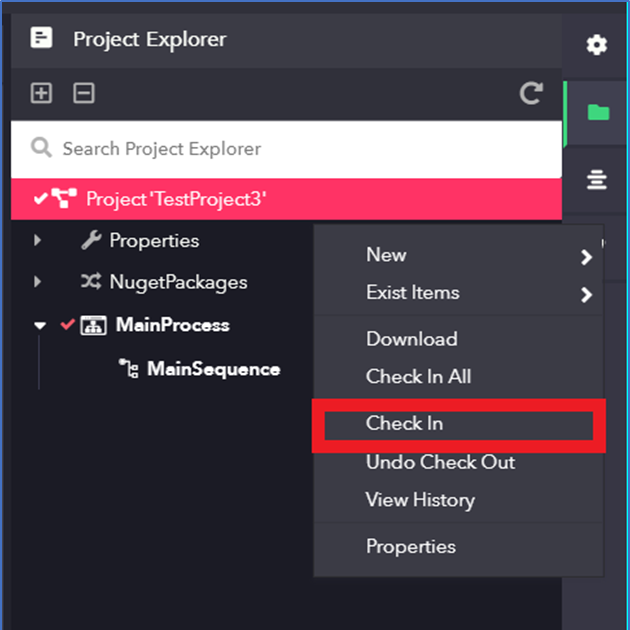
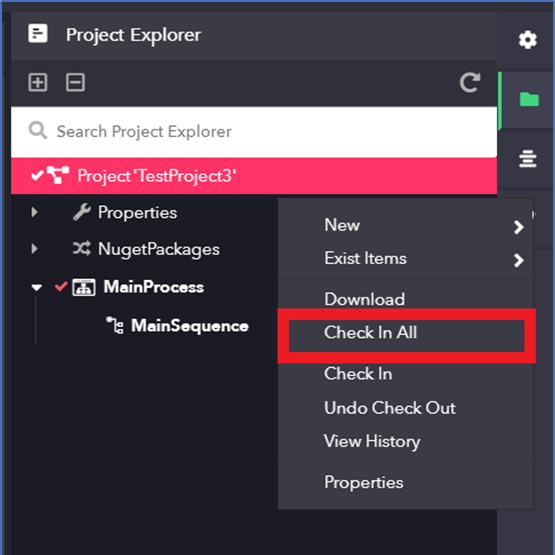
Right-click either on a particular Process and select the Check-In option Or Right-click on a Project and select the Check-In All option.
Note: The Check-In option is used for a particular Process while the Check-In All option is used to check-in all the processes that come under the project. It is not only applicable for the process but also for the UI window, Folder and File.
In the “Project Explorer”, a lock symbol will appear beside the process that had been checked-in as shown in the above image.
On accessing the Source Control panel, a list will be shown consisting of a project, processes, folders, files, UIWindows or a combination of all depending on what the user has created or modified.
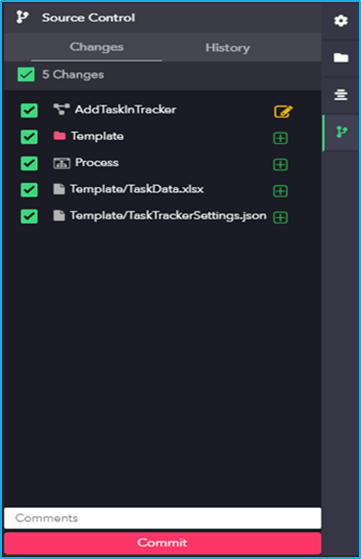
Suppose the list has only processes within it, then either a single process or multiple processes can be selected depending on the requirement.
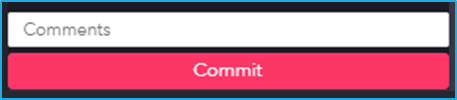
Add a comment in the comments field and then ‘Commit’ button can be clicked finally to Check-In the selected processes.
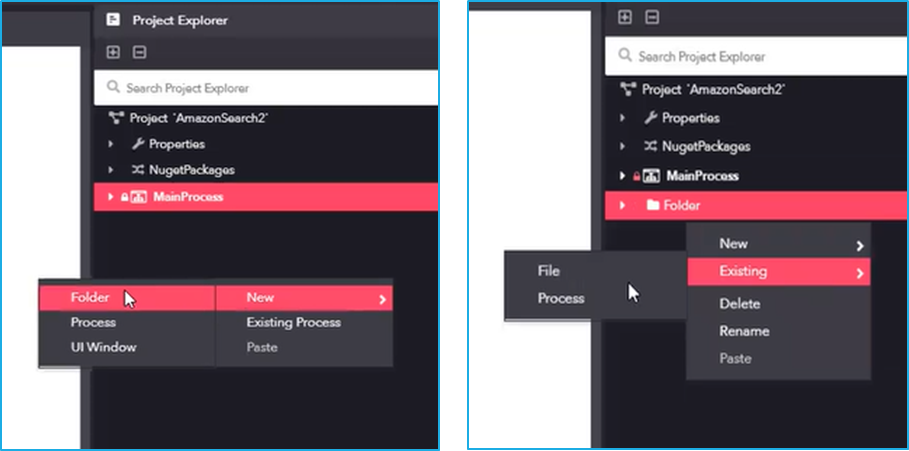
Users have an option to create a folder within a project as shown in the screenshot given below. The common processes, files, UI-windows and subfolders can be stored in a folder which will be useful while creating a project.
To create a folder, right-click on the project name in the Project Explorer panel, hover the mouse over the ‘New’ option, and then click on the ‘Folder’ option.
Right click on the created folder and hover the mouse over the ‘New’ option. Then select the appropriate option from the dropdown to create a process, file, UI window or folder.
Right click on the created folder and hover the mouse over the ‘Exist Items’ option. Then select the appropriate option from the dropdown to add a process or file stored in the local system.
It is used to control the access for each role used in the BOT Manager and it’s also possible to restrict the permission for users. Roles are sets of permissions assigned to users to use certain resources.
Note: Authorized users or admins can only add roles and manage permissions for the users in Roles.
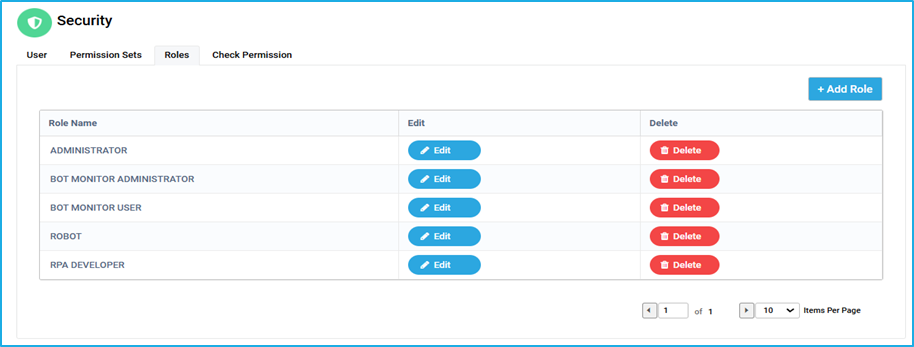
The ‘Roles’ tab displays the role name and allows edit/delete for a particular role.
Role Details
Default Roles
Permission
Administrator
Full access to Studio and BOT Manager.
BOT Monitor Administrator
Full Control for all Tabs Except the Jobs Tab and Projects.
RPA Developer
Full Control for Projects and All Tabs in BMT Except Security Tab.
BOT Monitor User
Full Control for all Tabs Except Security and BMT Settings and Projects.
Robot
Full Control for Robot and Transaction Tab and Only View Permission for Processes, Packages and Resources. View, Create and Edit Permissions for Jobs Tab.
Permissions of users may vary depending on the assigned role.
Note: Permissions cannot be edited for Default roles.
A NuGet package is a single ZIP file with the .nupkg extension that contains a single activity, or a group of activities created by the developers to reduce repetitive tasks.
“NuGetPackages” feature can be found inside the Project Explorer tab of the RPA Genie Studio.
First, the required NuGet Package should be added in the Bot Manager, which can then be installed in the RPA Genie Studio for further use.
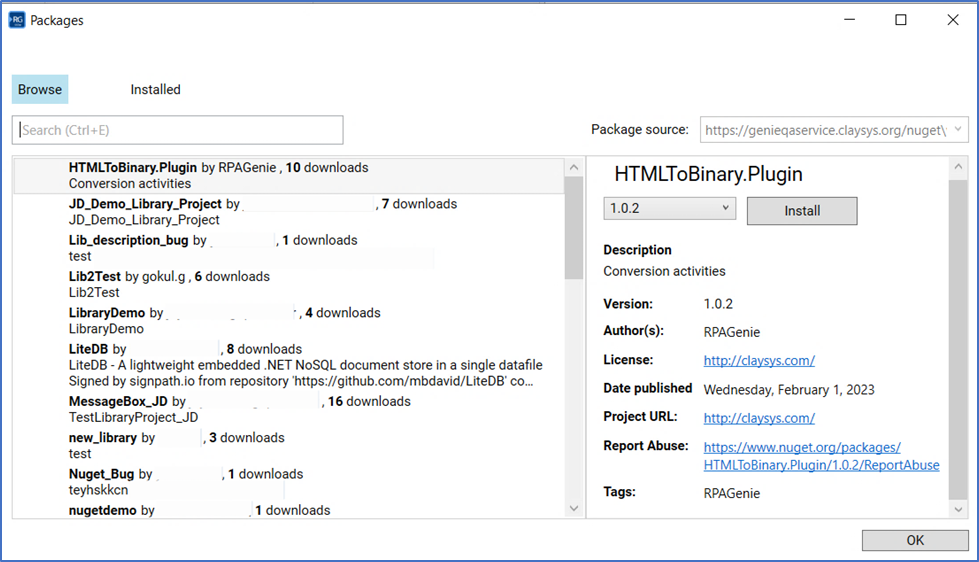
On clicking the “NuGetPackages” tab, a pop-up window called “Packages” will appear.
On clicking the “Browse” tab, it allows to either search for a particular package by giving the package name in the search field or select a particular package from the list of packages that are available.
On clicking the “Installed” tab, the user will be able to view all the installed NuGet Packages.
Under the “Browse” tab, on selecting a particular NuGet Package, all the details of that package can be viewed as shown in the above image. In addition to that, it allows users to choose the version of that package that needs to be installed.
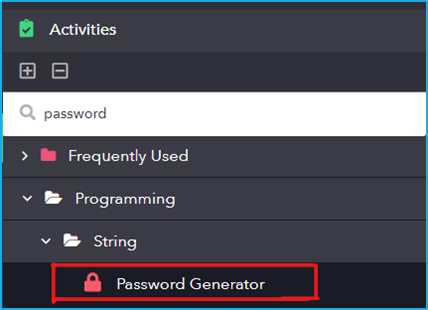
Once a NuGet Package is installed, it will get added in the Activities panel along with the other default activities. Depending upon the NuGet Package that have been installed, it could either be a single activity (Eg: Password Generator) or group of activities in the form of a folder (Eg: PDF).
For Example, if a user installs a NuGet Package named “RPA.Genie.Password.Generator”, a new activity called “Password Generator” will be added to the “Activities” panel and on expanding “NuGetPackages”, it displays the installed package under it. “Password Generator” is an activity that helps to generate random password of the required length.
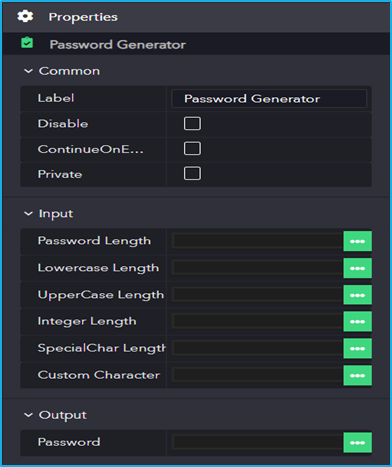
Similar to the properties of other activities present inside the RPA Genie Studio, the above-mentioned “Password Generator” activity has fields like “Common, Input and Output” as shown below.
Please note that if a NuGet Package has not been installed in a particular project, it cannot be used by that project.
Note: These activities are used to securely share sensitive information, such as a password, between users to prevent unauthorized access to sensitive data